

Quick answer
Mount Toubkal weather varies dramatically by season and altitude. Summer months (June through September) bring daytime temperatures of 15–25°C at basecamp with freezing nights above 3,000 meters, while winter (December through March) delivers heavy snowfall, summit temperatures dropping to −15°C, and persistent avalanche risk on northern slopes. Spring and autumn offer the most stable conditions, with moderate temperatures and minimal precipitation, though afternoon cloud buildup remains common year-round above 3,500 meters.
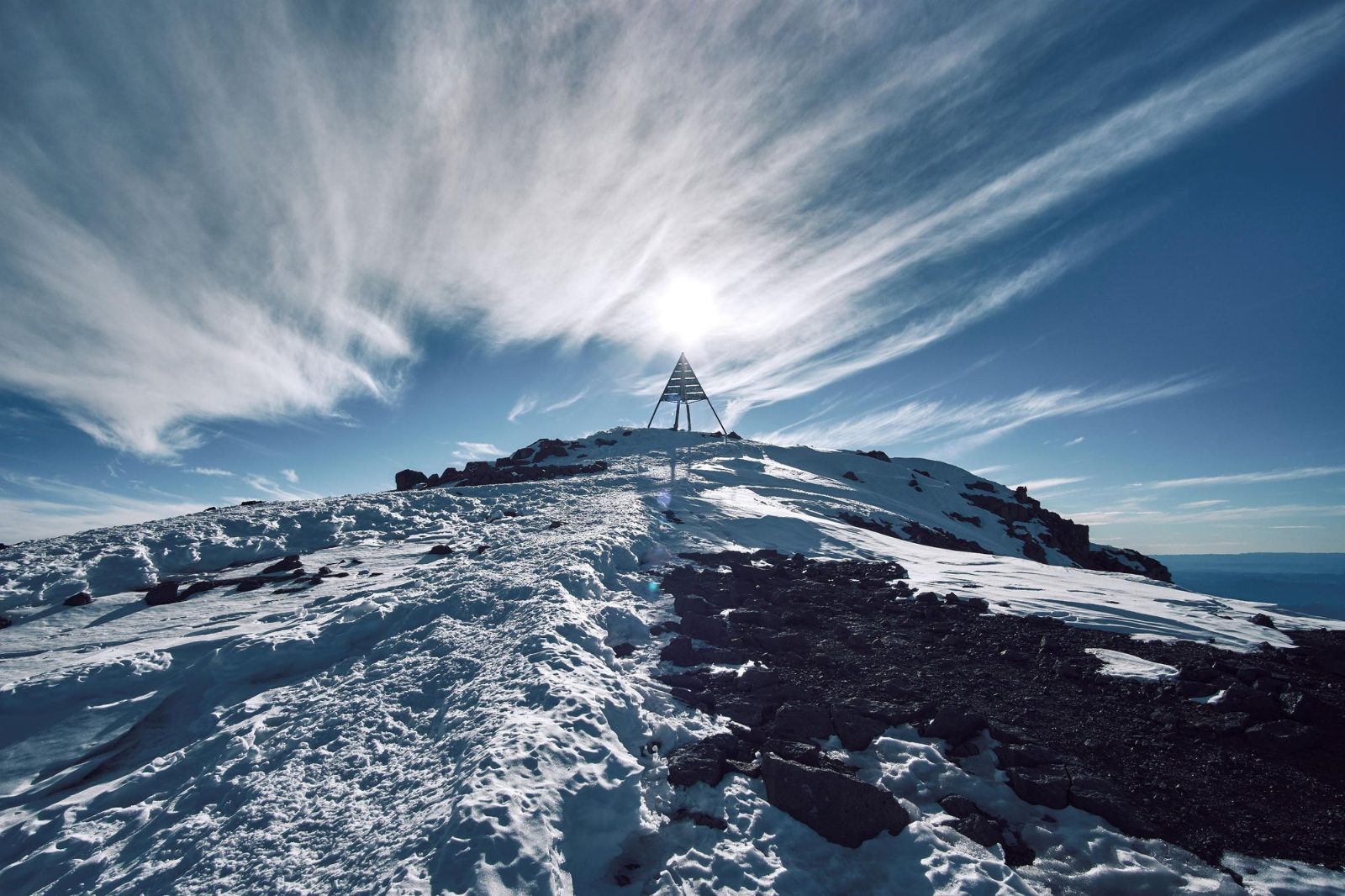
The summit of Mount Toubkal experiences weather conditions closer to the Arctic Circle than the Sahara, despite sitting just 63 kilometers from Marrakech. Altitude compresses climate zones into vertical bands: the Imlil valley at 1,740 meters enjoys a Mediterranean climate, the refuge sits in an alpine zone at 3,207 meters, and the summit occupies a nival zone where permanent snow persists in north-facing gullies even through August. Temperature drops approximately 6.5°C for every 1,000 meters of elevation gain. A comfortable 20°C morning in Imlil translates to near-freezing conditions at the Toubkal Refuge and subzero temperatures on the summit plateau. This lapse rate intensifies in winter, when summit readings routinely reach −20°C while the trailhead remains snow-free. Wind chill amplifies the cold—sustained gusts above 3,500 meters regularly exceed 50 km/h, particularly during afternoon thermal updrafts. Precipitation patterns follow the Atlantic storm track. The High Atlas intercepts moisture-laden westerlies between October and April, delivering snow above 2,500 meters and rain in the valleys. June through August constitute the dry season, though isolated thunderstorms can materialize within hours during afternoon heating. These summer storms deposit hail and sleet above 3,800 meters, temporarily whitening the summit scree even in July. Lightning risk peaks between 14:00 and 17:00, the reason most guided ascents target a pre-dawn summit window. Visibility governs summit success as much as temperature. Morning departures from the refuge capitalize on the stable air mass that settles overnight. By midday, valley heating generates convective clouds that engulf the ridgeline, reducing visibility to under 20 meters and obscuring the cairned trail markers essential for navigation above the snowline. Climatic conditions at Toubkal National Park, under the jurisdiction of Morocco's Eaux et Forêts department, remain accessible year-round at the official rate of 0 MAD for park access, though guide and permit fees apply separately through licensed operators based in Imlil.
“Altitude compresses climate zones into vertical bands—the summit occupies a nival zone where permanent snow persists in north-facing gullies even through August.”
Mount Toubkal Weather by Season — Best Time to Climb
Late May through September is the most reliable window to climb Mount Toubkal, when the summit trail is largely snow-free and passable without technical gear. Outside these months, snow and ice above roughly 3,000 meters call for crampons and winter mountaineering experience.
June to September
Peak season, busiest refuge nightsSnow-free, daytime 10-20°C, near-freezing at summit dawn
The standard trekking season, with the Toubkal Refuge at its fullest and the two-day standard route accessible to fit hikers without technical equipment.
October to November
Moderate, fewer trekking groupsCooling fast, early snow possible above 3,500m
A shoulder period with clear autumn air but rising odds of early snowfall on the upper slopes as winter approaches.
December to March
Low, winter mountaineering crowd onlySnow and ice above 3,000m, sub-zero summit temps
Requires crampons, ice axe and winter alpine experience; this is not a season for standard non-technical trekking.
April to May
Moderate, snowmelt seasonLingering snowfields, daytime thaw, cold nights
Conditions transition from winter to summer trail states, with snow patches persisting on shaded and upper sections.
06:00-09:00 daily
Quiet, before day-trip groups arriveClear skies and calm winds before afternoon cloud buildup
Mornings offer the clearest summit visibility; cloud cover typically builds through the afternoon regardless of season.
Verdict: Aim for June through September, starting the day's approach between 06:00 and 09:00 to clear the exposed ridgeline before afternoon clouds move in.
Getting to Mount Toubkal Before the Weather Turns
Mount Toubkal sits within Toubkal National Park south of Marrakech, and the standard approach is by road to Imlil followed by a trail on foot into the mountains. Most visitors combine a shared or private taxi from Marrakech with a walk from Imlil to the refuge and trailhead.
R203 road from Marrakech to Imlil
Grand taxi (shared) from Marrakech (Bab Doukkala/Jemaa el-Fna area) to Imlil
Imlil to Toubkal Refuge (Refuge du Toubkal) via Aroumd
Toubkal Refuge to Toubkal summit trailhead
Mount Toubkal Weather Prep Checklist
Weather shifts fast above 4,000 m — prep gear and permits for conditions from blazing sun to sudden snow.
-
Arrange certified guide and park permit — Required for summit access and navigation in low visibility
-
Check three-day forecast before departure — Afternoon storms and freezing nights develop quickly
-
Pack layering system for 30°C temperature range — Morning sun to sub-zero summit winds in one climb
-
Bring microspikes or crampons if snow forecast — Winter and spring routes require traction above base camp
-
Carry waterproof shell and insulated jacket — Rain and hail possible year-round above 3,000 m
-
Confirm refuge booking or tent equipment — Exposure at altitude is dangerous if weather turns
-
Load extra water capacity for hot-weather ascents — Dehydration accelerates above tree line in summer
Mount Toubkal Weather Safety Dos and Don'ts
Weather on Toubkal shifts rapidly above 3,000 m, turning clear mornings into afternoon squalls. Following guide protocols and park access rules protects both you and rescue teams.
Do
- Turn back immediately if your guide calls the descent due to conditions
- Start before 09:00 to avoid afternoon thunderstorms and cloud buildup
- Monitor sky changes and retreat before lightning or whiteout conditions develop
- Respect park closure announcements during heavy snow or avalanche warnings
Don't
- Don't insist on summiting when guides advise turning back for weather safety
- Don't dismiss afternoon cloud buildup as harmless—storms form quickly above the refuge
- Don't enter closed zones when winter avalanche risk is posted by park authorities
- Don't proceed without checking the morning forecast at the refuge or with guides
Mount Toubkal Weather Facts Worth Knowing
Mount Toubkal's weather is shaped almost entirely by its elevation, and the gap between the trailhead and the summit produces conditions that can feel like two different climates in the same day. These verified patterns explain why the mountain surprises so many first-time trekkers.
2,427 meters separate Imlil from the summit
Imlil village, the usual trekking start point, sits near 1,740 m, while Toubkal's summit reaches 4,167 m, the highest point in North Africa. That elevation gap alone drives most of the mountain's weather variation.
Snow can linger into June
Toubkal's upper slopes and summit approach typically hold snow and ice from around November through May, and in higher-snowfall years patches persist into June, often requiring crampons and an ice axe on the final ascent.
Roughly 6.5°C is lost per 1,000 meters
Standard atmospheric lapse rate means air temperature drops about 6.5°C for every 1,000 m climbed. Applied to the Imlil-to-summit gain, this alone accounts for a theoretical double-digit temperature difference between valley and peak on a clear day.
3,207 meters is where most trekkers sleep before summit day
The Toubkal Refuge, the main overnight hut on the standard route, sits at about 3,207 m. Nighttime temperatures there are consistently colder than in Imlil, even in summer.
Afternoon cloud buildup is a daily pattern
High Atlas terrain typically stays clearer in early morning hours, with convective cloud forming over the peaks as the day warms, a pattern common to mountain ranges of this scale and one reason summit attempts favor early starts.
4,167 meters makes Toubkal North Africa's highest point
Its summit elevation means it experiences alpine conditions, including sub-zero nights for much of the year, despite sitting in a otherwise semi-arid region of Morocco.
Mount Toubkal Weather and Park Access Hours
Toubkal National Park has no gate and no daily closing time: access runs continuously, every day of the week.
| Monday | 00:00 – 23:59 | No closure |
|---|---|---|
| Tuesday | 00:00 – 23:59 | No closure |
| Wednesday | 00:00 – 23:59 | No closure |
| Thursday | 00:00 – 23:59 | No closure |
| Friday | 00:00 – 23:59 | No closure |
| Saturday | 00:00 – 23:59 | No closure |
| Sunday | 00:00 – 23:59 | No closure |
The park's clock-time access does not change through the year; daylight and weather, not opening hours, set practical limits on entry.
Check availability
FAQ: Mount Toubkal Weather
Everything you need to know about mount toubkal weather