

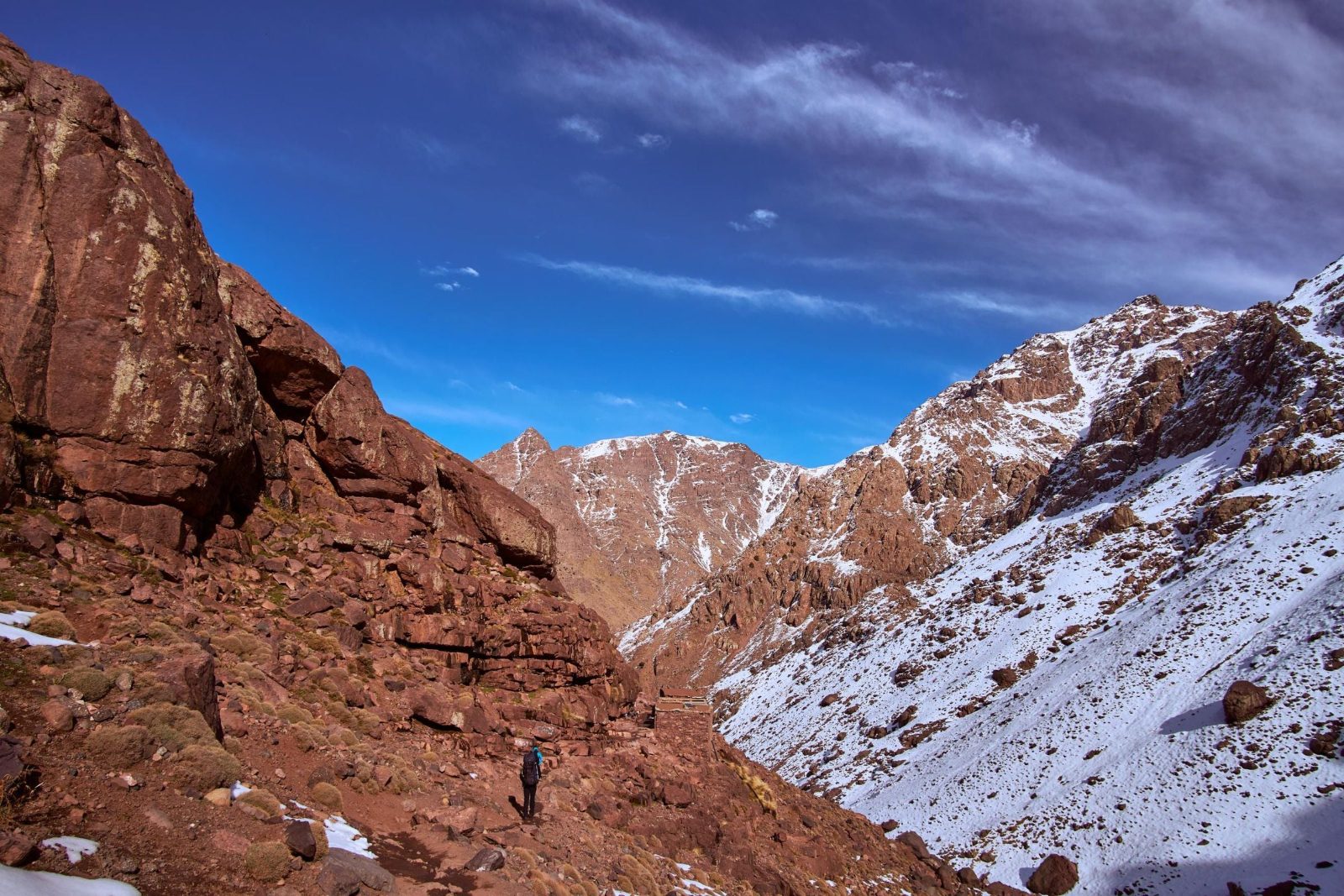
Quick answer
How long to climb Mount Toubkal typically requires two days: day one covers the 5-hour approach from Imlil to Refuge du Toubkal at 3,207 meters, and day two involves a 4-5 hour summit push followed by a 3-4 hour descent back to Imlil. Fit climbers complete the entire ascent and descent in one long day of 8-10 hours, though this demands an alpine start around 05:00 from Imlil and strong acclimatization.
North Africa's highest summit sits at 4,167 meters, and the altitude gain from the trailhead determines how long the climb takes more than raw distance. The standard route from Imlil covers roughly 19 kilometers round trip with 1,900 meters of elevation gain, a profile that translates to different durations depending on acclimatization and weather. The two-day itinerary remains the most popular choice because it splits the effort into manageable segments and allows partial acclimatization at the refuge. Day one from Imlil to the mountain hut involves steady climbing through the Mizane Valley, passing Armed village and the shrine of Sidi Chamharouch before the final steep section to the refuge. Most parties arrive by early afternoon, leaving time to rest before the pre-dawn summit attempt. The second day begins between 04:00 and 05:00 to reach the summit by mid-morning, when conditions are most stable and views extend across the High Atlas range toward the Sahara. Pace varies significantly with fitness, altitude response, and trail conditions. Snow cover between December and April adds 1-2 hours to summit day and requires crampons and ice axe skills. Summer and autumn offer faster travel on dry scree, though afternoon storms can develop quickly above 3,500 meters. Groups moving together typically adopt the pace of the slowest member, and guided parties factor in rest stops and photography time. The one-day ascent appeals to experienced mountain athletes who treat Toubkal as a training objective rather than a trekking experience. This approach eliminates the need for refuge booking but demands strong cardiovascular fitness and prior altitude exposure. Even fit climbers find the descent punishing on knees and ankles after 8-10 hours of continuous effort, and the risk of afternoon weather deterioration increases when summit time extends past 11:00. Understanding how long to climb Mount Toubkal allows proper logistics planning, from arranging mule support for overnight gear to coordinating transport back to Marrakech. The mountain rewards preparation with clear summit views and a genuine sense of accomplishment at the rooftop of North Africa.
“The altitude gain from the trailhead determines how long the climb takes more than raw distance.”
How Long to Climb Mount Toubkal: Day-by-Day Timing
The standard Mount Toubkal ascent takes two days with an overnight at Toubkal Refuge (3,207 m), allowing proper acclimatization and an early summit push. Very fit hikers can complete the round trip in a single long day, though this requires a pre-dawn start and leaves no margin for weather delays.
Imlil to Sidi Chamharouch
Depart Imlil village (1,740 m) and trek 2–2.5 hours through walnut groves and the Mizane valley to the shrine at Sidi Chamharouch (2,310 m), where mules often rest.
Sidi Chamharouch to Toubkal Refuge
Continue 2–2.5 hours uphill on rocky switchbacks to Toubkal Refuge (3,207 m), arriving by early afternoon. Check in, hydrate, and rest to acclimatize before the next morning's summit attempt.
Pre-dawn departure from refuge
Wake at 04:00 and depart the refuge by headlamp, aiming to reach the summit before midday clouds and wind increase. Carry water and snacks; the ascent is non-technical but steep and scree-covered.
Summit and descent begins
Reach the summit (4,167 m) after 3–4 hours of steady climbing, then descend the same route back to the refuge. Total summit round trip from refuge: 5–7 hours depending on fitness and conditions.
Refuge to Imlil
After a rest and lunch at the refuge, descend 4–5 hours back to Imlil, arriving mid-to-late afternoon. The descent is faster but requires careful footing on loose scree sections.
Best Time of Day and Year to Climb Mount Toubkal
Late May through September offers the most predictable climb, since snow-free trails let most fit hikers reach the summit without technical gear, and starting between 05:00 and 07:00 keeps the final ridge clear before afternoon cloud and wind move in.
June to September
Moderate, busiest in July-AugustDaytime 15-25°C, near-freezing at Toubkal Refuge
Trails are mostly clear of snow, so the ascent moves at a steady pace without crampons for most parties.
October to November
Lower, fewer groups on the trailDaytime 5-15°C, nights below freezing, early snow possible
Weather is more variable and an early snowfall can slow the summit scramble, adding time to the push.
December to March
Lowest, mainly experienced winter climbersSummit routes snow and ice covered, well below freezing
Crampons, ice axe and prior winter mountaineering experience are generally needed, which extends the ascent.
April to May
Moderate, increasing through MayLingering snow on upper slopes, daytime 10-18°C
Snow patches near the summit can still call for crampons early in this window, tapering off by late May.
05:00-07:00 starts (any season)
—Calmer air and clearer visibility before midday
Starting in this window keeps climbers off the exposed summit ridge before afternoon wind and cloud build up, which is the main reason early starts shorten the effective climbing day.
Getting to the Mount Toubkal Trailhead in Imlil
Mount Toubkal sits in Toubkal National Park south of Marrakech, and the standard approach is a road transfer to Imlil, the last village reachable by vehicle, followed by a walk into the mountains.
Marrakech to Imlil via the R203/P2017 road through Asni
Grand taxi shared or private, Marrakech (Bab Doukkala/Jemaa el-Fnaa area) to Imlil
Imlil to Sidi Chamharouch, then on to the Toubkal Refuge trailhead
Preparing for the Mount Toubkal Climb: What to Arrange First
Most climbers underestimate the advance logistics—mandatory guide bookings and refuge spots fill weeks ahead in peak season.
-
Book a certified mountain guide — Moroccan law requires guides for Toubkal; summer slots disappear 3–4 weeks early.
-
Reserve refuge accommodation — Refuge du Toubkal beds (50 capacity) book out fast; confirm or arrange camping gear.
-
Secure warm-weather layering and headlamp — Summit temperatures drop to −5°C even in summer; pre-dawn starts demand working lights.
-
Train for 6–8 hour mountain days — The 1,400 m ascent punishes unprepared legs; build endurance 4–6 weeks before.
-
Arrange Imlil transport logistics — Shared taxis from Marrakech (90 min) leave mornings; late arrivals miss the trailhead window.
-
Pack blister prevention and sun protection — Scree descent shreds feet; 4,167 m altitude intensifies UV exposure.
Common Mistakes That Make the Toubkal Climb Take Longer
Several avoidable errors turn a manageable two-day climb into a longer, harder ordeal. Most stem from underestimating the mountain's altitude and weather timing.
Starting the summit push after 06:00
Leave the refuge by 05:00–05:30 to reach the summit before afternoon clouds roll in and winds pick up, giving you a safer descent window.
Skipping the overnight acclimatization at Refuge du Toubkal
Spend at least one night at the refuge (3,207 m) to adjust to altitude. Pushing straight from Imlil to the summit in one day courts severe altitude sickness and forces retreat.
Underestimating the scree descent time from the summit
The loose scree and boulder field on the way down demand careful footing and take nearly as long as the ascent. Budget 2.5–3 hours from summit back to the refuge, not the 90 minutes many assume.
Ignoring weather changes after midday
Afternoon cloud cover and wind are near-daily occurrences above 4,000 m. If you summit late, you lose visibility and face harder navigation on the descent—plan to be off the peak by noon.
Carrying too much weight without testing the load
An overloaded pack at altitude slows your pace significantly. Test your gear on a local hill before the trip and strip out non-essentials to keep your summit-day load under 8 kg.
What to Combine With a Mount Toubkal Climb Near Imlil
Climbers with an extra day or two beyond the summit push can extend the trip into the surrounding Toubkal massif rather than heading straight back to Marrakech.
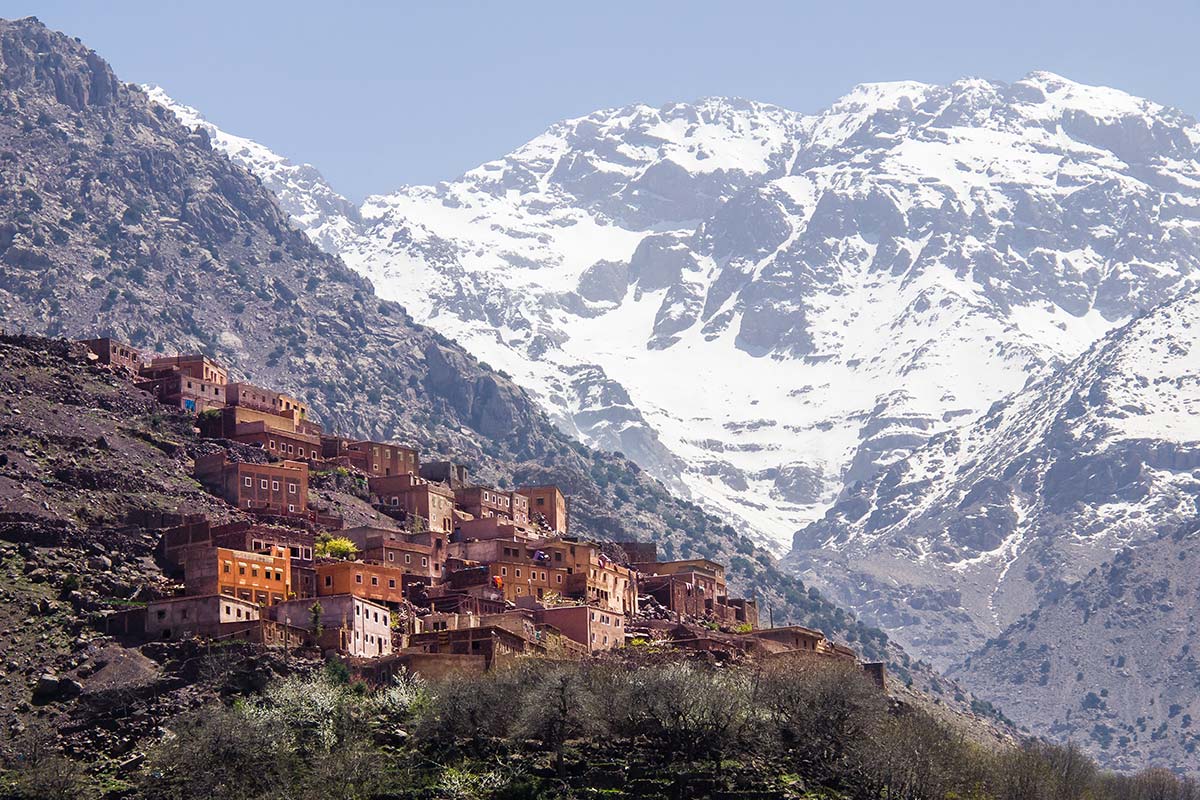
Imlil village
The trailhead village itself rewards a slower look on the way down, with mule paths, orchards, and Berber hamlets worth a half-day once the summit is done.
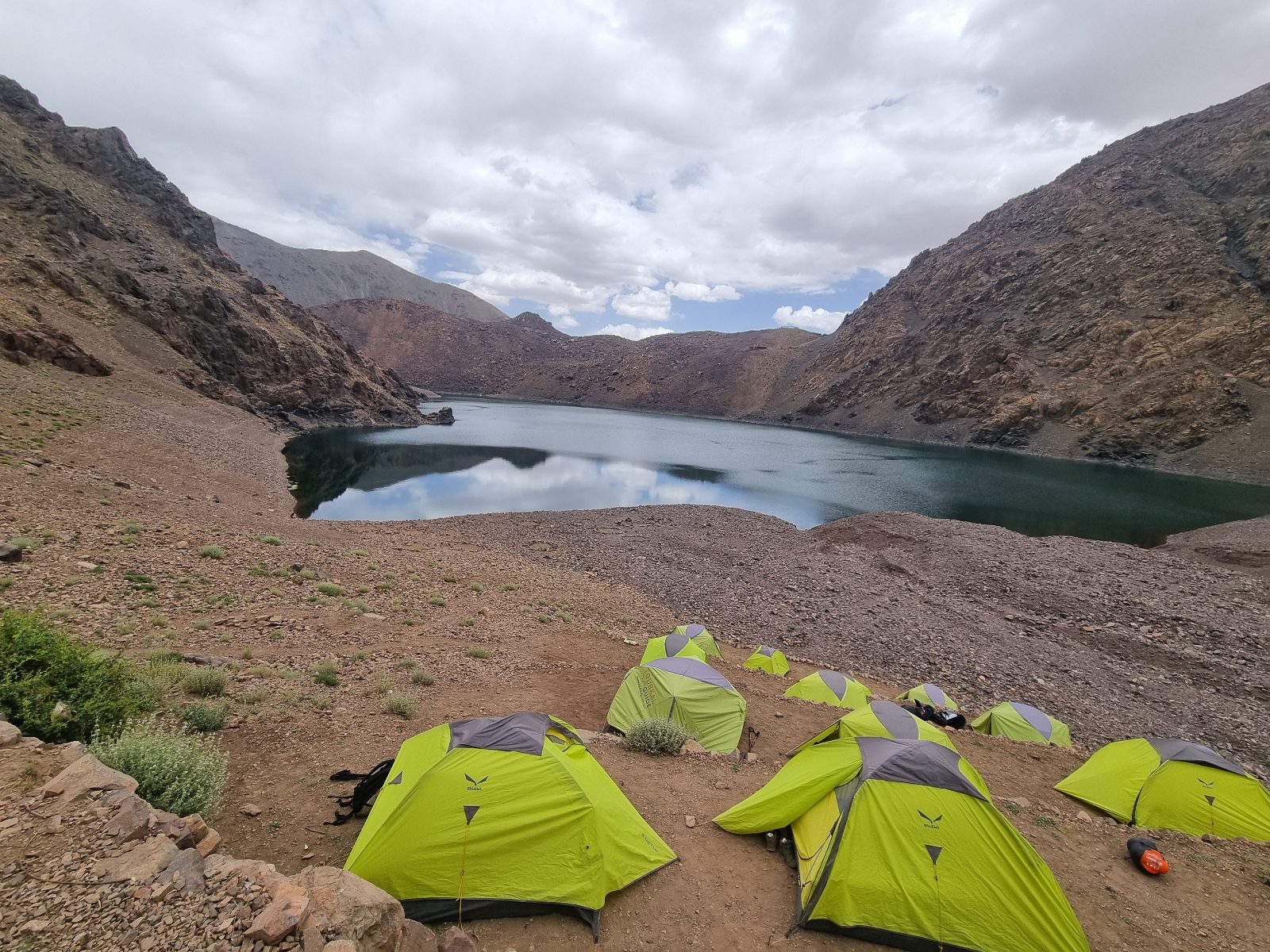
Lake Ifni
This glacial lake sits in a rocky basin south of the main refuges and makes a natural add-on day for climbers who already have gear and altitude acclimatization from the ascent.
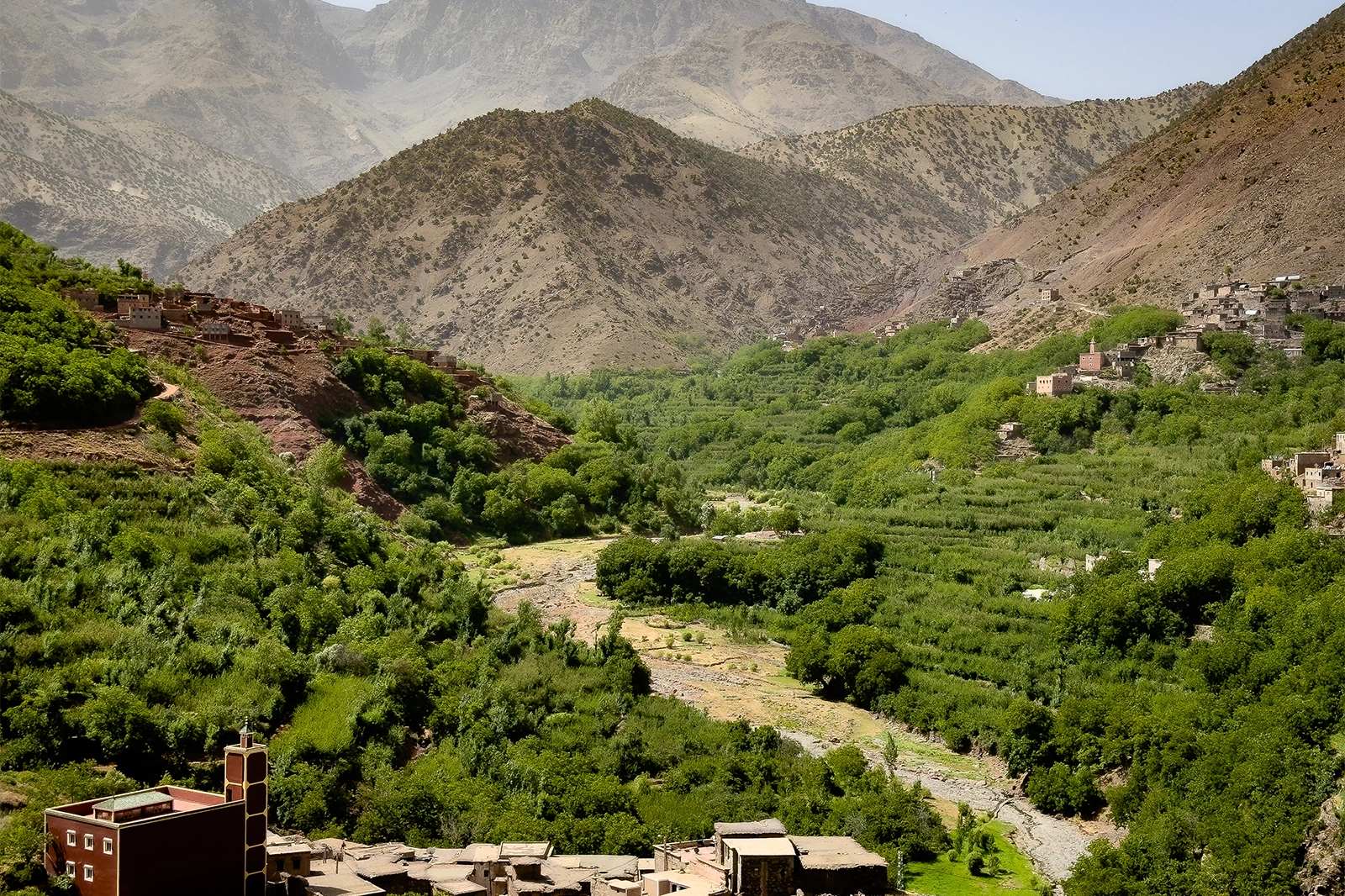
Azzaden Valley
This quieter valley offers an alternate approach to Toubkal and pairs well as a multi-day loop for trekkers who want to descend a different way than they came up.
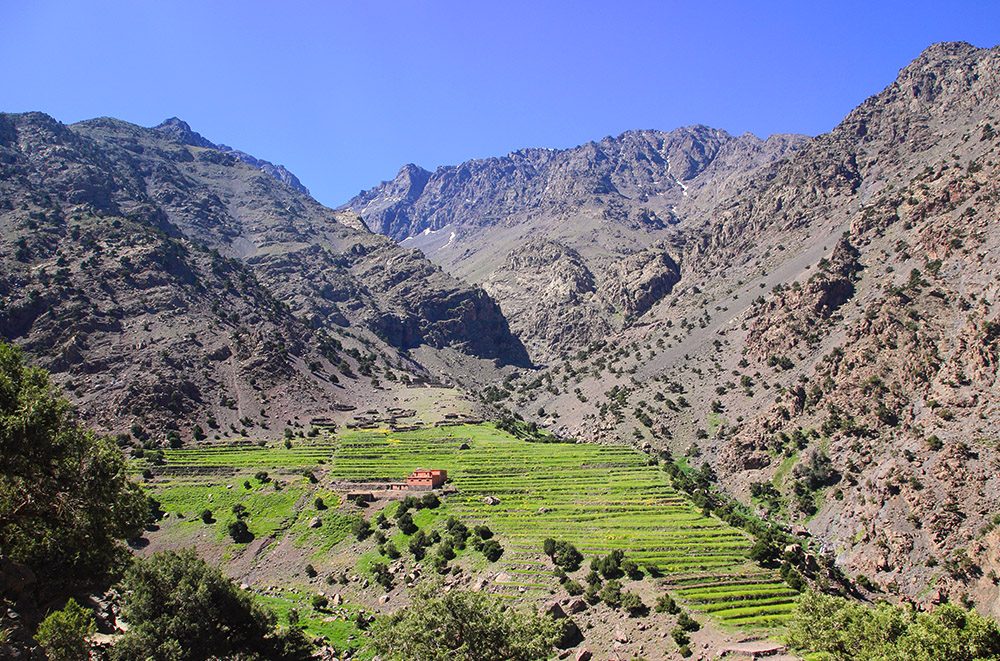
Tizi Mzik pass
A ridge pass above Imlil often used on the Azzaden loop, giving views back toward the Toubkal massif for those with a spare afternoon before or after the climb.
Check availability
FAQ: How Long to Climb Mount Toubkal
Everything you need to know about how long to climb mount toubkal